
You’re ranking on Google. So why are your competitors appearing in AI answers?
A strong Google position doesn’t always mean you’re visible in AI-powered search. Here’s why the results can be different, and what to do about it.
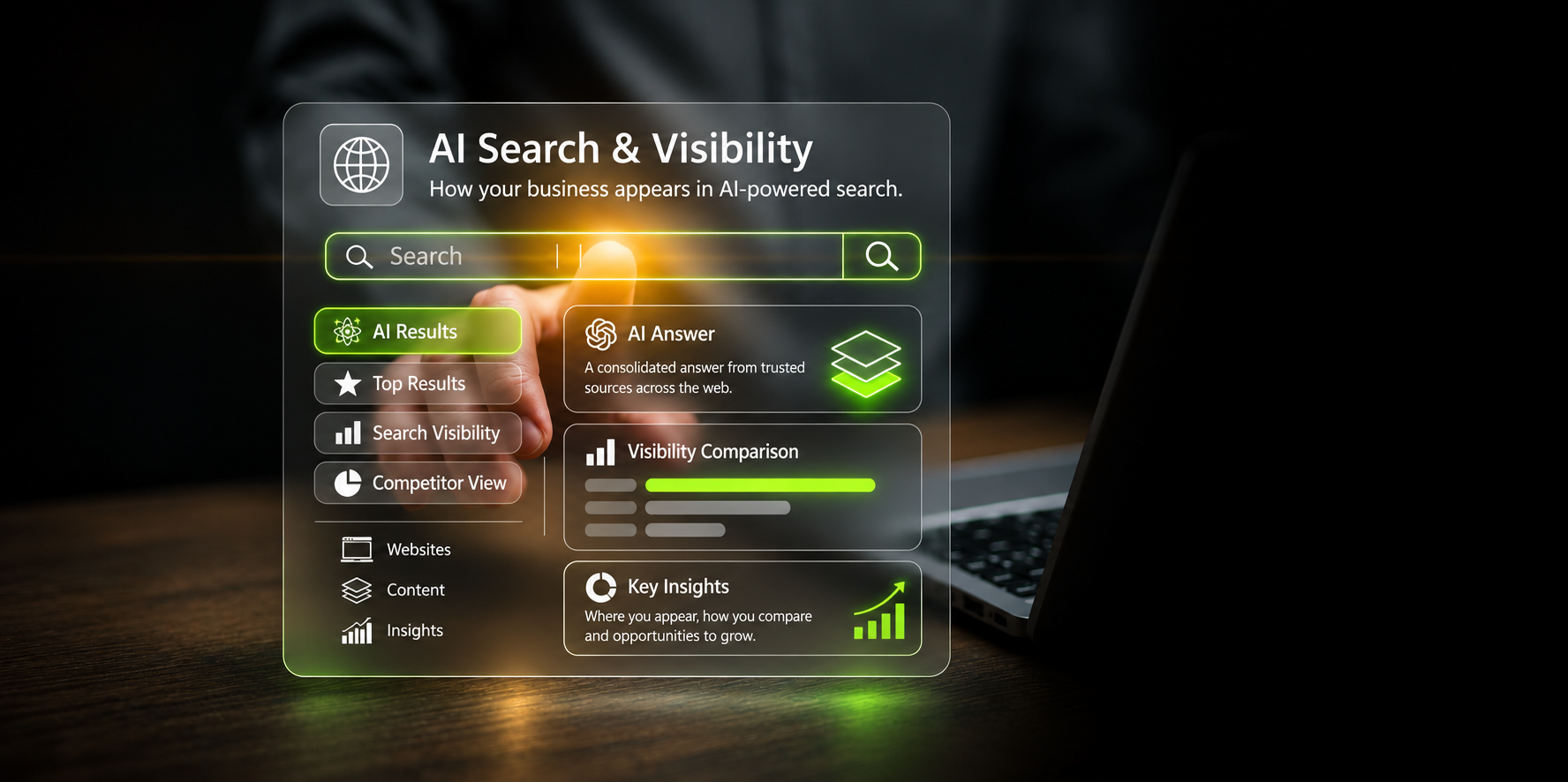
You’ve invested in your Google visibility. Your business appears for relevant searches. Then you ask an AI tool a question a prospective customer might ask, and a competitor gets mentioned instead.
It’s frustrating. But it doesn’t automatically mean your SEO has failed, or that your competitor has discovered something you haven’t.
Before deciding what needs changing, establish what that appearance actually tells you.
Why AI search can show different results
An AI-generated answer isn’t simply a Google results page rewritten as a paragraph. Different platforms can interpret questions, retrieve information and present answers differently. Google also explains that its own AI Overviews and AI Mode can show different responses and supporting links.[1]
An answer might mention businesses, link to sources or explain a subject without recommending anyone. ChatGPT’s search responses can include citations; Gemini does not provide source links with every response.[2][3]
Keep those distinctions clear. A mention puts a business in the answer. A citation links to supporting material. Neither proves that someone visited the website or made an enquiry.
Questions, platforms, available information and context all matter. Strong Google rankings do not guarantee the same visibility in AI-generated answers.
What might influence which businesses appear?
There is no universal checklist that guarantees selection. A useful investigation examines the information available about each business and how it relates to the question:
- Service clarity: Can someone establish exactly what you offer and who you help?
- Relevant expertise: Is that specialism supported by useful explanations, appropriate credentials or examples you can substantiate?
- Third-party references: Do credible external sources discuss the business and its relevant work?
- Accurate information: Are services, locations and business details consistent and current?
- Question fit: Does the business genuinely match the requirement being described?
These are lines of enquiry, not confirmed selection rules for every platform. Google’s advice on useful, reliable content supports reviewing its substance, rather than publishing more simply to increase volume.[4]
Why competitors might be ahead
Consider a hypothetical comparison between two established financial advisory firms. Both perform well in relevant Google searches.
A prospective customer asks an AI tool which firms help business owners plan their finances before selling a company. Firm B appears. Firm A doesn’t.
Firm A offers that service, but its website describes financial planning broadly. Firm B explains its work with business owners, publishes a guide about preparing for a sale and features in a relevant professional publication.
Those differences deserve investigation. They do not establish why Firm B appeared.
If the answer links to Firm B’s guide or interview, that provides something specific to examine. A displayed source is still not a complete explanation of the platform’s selection process. Without source links, the basis may be less clear.
Now change the question to retirement planning for employed professionals. The comparison may look different. That is why a broad Google ranking and an answer to a specialist question need context before they are compared.
Repeated appearances across relevant questions are worth examining more closely than one isolated mention. Even then, they indicate a pattern to investigate, not proof that copying Firm B’s content will reproduce its visibility.
The Search AI Perspective
A competitor’s appearance is a signal. It isn’t an instruction to copy their marketing.
At Search AI, we want to understand whether that competitor is repeatedly entering consideration for the services and customers that matter to your business.
That means examining the questions, the answers and any sources provided, then comparing how each business is represented. Is the competitor being recommended, cited for useful information or merely mentioned? Are their services accurately described? Does their apparent advantage concern work you actually want to win?
This also helps distinguish a visibility problem from a positioning problem. If an answer associates your business with the wrong services, getting mentioned more often may simply repeat the misunderstanding.
The purpose is to establish a worthwhile line of investigation and a proportionate response. Sometimes information needs clarifying. Sometimes further technical or content assessment is justified. Sometimes the evidence is too limited to support spending anything yet.
What you can do about it
1. Where are competitors appearing?
Choose questions that reflect genuine buying requirements. Record the exact wording, platform, date and relevant context. Save the answer and distinguish mentions, recommendations and source links. Compare businesses against the same question and conditions, rather than collecting unrelated screenshots.
2. What might explain the difference?
Open the sources where available. Compare service descriptions, supporting information and relevant external references. Check whether the answer represents both businesses accurately. Repeat a manageable set of relevant checks to see whether a difference recurs. Treat possible explanations as hypotheses until further evidence supports them.
3. What deserves action?
Prioritise gaps connected to services you want to sell and customers you want to reach. Correct demonstrably inaccurate information, but investigate before commissioning wider changes. A competitor mention alone doesn’t justify a website rebuild, a publishing programme or a new supplier. Agree what a proposed improvement should address and how its effect will be reviewed.
Understand the difference before reacting
The objective isn’t to match every competitor mention. It’s to understand whether another business is gaining relevant visibility while yours is overlooked or misunderstood.
Don’t let a competitor’s appearance dictate your next investment. Let the evidence guide it.
Key takeaways
- Google rankings and AI appearances measure different kinds of visibility.
- AI answers vary with the question, platform and available information.
- Competitor appearances are signals to investigate, not proof of a ranking factor.
- Establish meaningful patterns before prioritising investment.
EXPLORE YOUR SEARCH VISIBILITY
Find out where competitors are getting seen.
Understand the visibility gaps worth investigating before deciding where to invest.